
JEANNE’S REVIEW
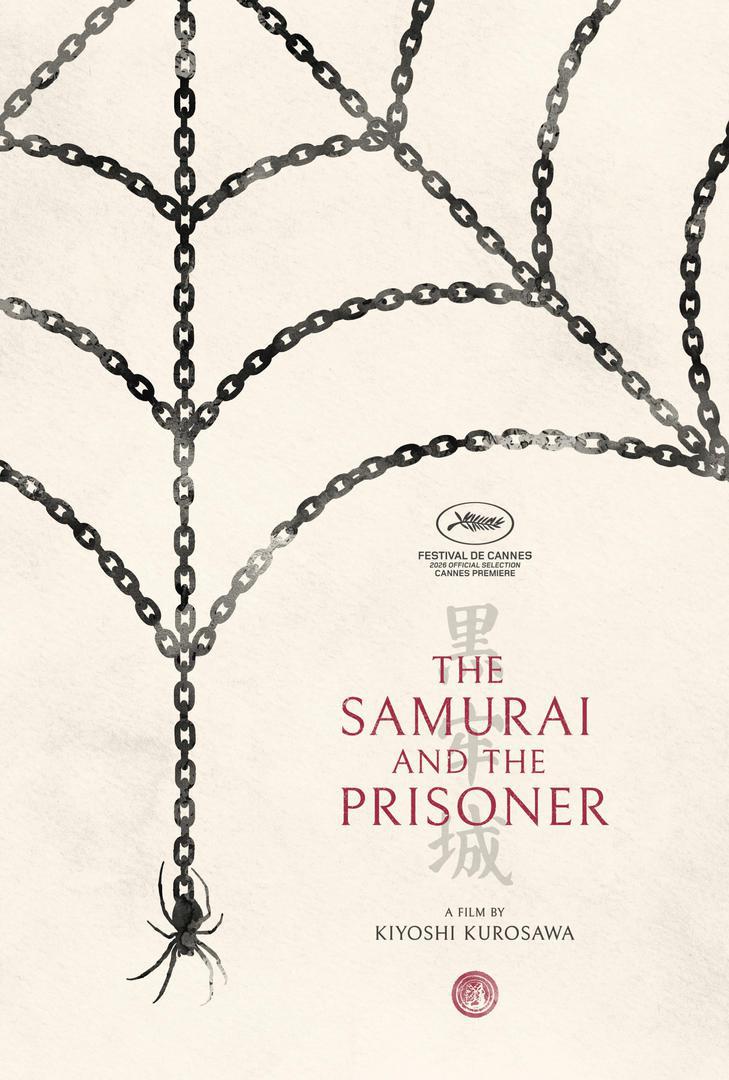
The ancient Japanese Buddhism phrase, “Advance to paradise, retreat into hell”, begins Kiyoshi Kurosawa’s latest film, THE SAMURAI AND THE PRISONER, and it is oft repeated throughout. And though this movie is set in 16th century Japan, Kurosawa believes this phrase is still relevant today.
Based on Honobu Yonezawa’s award-winning 2021 novel, Kokurojo: The Samurai and the Prisoner, set in Osaka during the Sengoku period in 1578, this work of historical fiction illuminates a battle of wills between the Samurai, Lord Akaraki Murashige (Masahiro Motoki), and his prisoner, Kanbei Kuroda (Masaki Suda). Lord Murashige has risen up against the villainous Nobunaga Oda (Bando Shingo) and now finds himself held captive inside the walls of his well-protected Arioka Castle.
Kanbei arrives to inform Murashige that his power is changing --- shifting away from Murashige and his allies --- and that Oda cannot be defeated. But instead of beheading Kanbei, as he totally anticipates, Murashige throws Kanbei into the castle’s dungeon.
Outraged and insulted, Kanbei takes up residence in the dark and dreary space where he and Murashige begin a battle of wills. Aided in this challenge by his wife Chiyoho (Yuriko Yoshitaka) and his trustworthy generals, Murashige must deal with the advance of Oda, along with a bizarre succession of mysterious and violent deaths in and around the castle.
Like Yonezawa’s novel, Kurosawa’s film transports the viewer throughout the various seasons utilizing the landscapes as he envisions what 16th century Japan may have resembled. THE SAMURAI AND THE PRISONER is starkly beautiful with little or no accoutrements to sully the scenes. Director of Photography Yasuyuki Sasaki has done a masterful job focusing on these fascinating characters while also showcasing their barren surroundings in a purely antiquated way.
But THE SAMURAI AND THE PRISONER is definitely performance driven with Masahiro Motoki leading the cast. He delivers a virtuoso portrayal of the veteran samurai --- commanding the attention of everyone in his castle --- and the movie theater. Masaki Suda is equally mesmerizing as the skilled strategist sent from a rival clan to warn the samurai of his possible impending doom. And Yuriko Yoshitaka does a marvelous job playing the dutiful wife, giving her husband food for thought near the end of the movie by reminding him “There is paradise even for those who retreat.”
At two hours and 27 minutes, THE SAMURAI AND THE PRISONER may not interest a great many cinephiles. However, for those who are ardent fans of this period in Japanese history, Kurosawa’s film should not be missed.
In theaters July 31st
OPINION: SEE IT NOW!
DAVID’S REVIEW
For a story set roughly 450 years ago in Osaka, Japan, acclaimed writer/director Kiyoshi Kurosawa has crafted an intriguing film that international audiences will find fascinating. The fictional tale is based on the 2021 novel Kokurojo: The Samurai and the Prisoner written by Honobu Yonezawa. His book won the Naoki Prize in Japan which is comparable to the Pulitzer Prize in America.
THE SAMURAI AND THE PRISONER features gripping dialogue, particularly between the film’s two leads, Lord Murashige (Masahiro Motoki) and his prisoner Kanbei Kuroda (Masaki Suda). Another extraordinary supporting performance is turned in by Yuriko Yoshitaka as Murashige’s wife Chiyoho. She has one blistering scene that earns a “memorable” label.
Although it gets off to a sluggish beginning, the story moves into high gear as Murashige must determine how best to defend Arioka Castle against a formidable foe. And he is advised by a man whom he sent to his dungeon prison months earlier. Kurosawa also manages to incorporate some rather incredible cinematography, courtesy of Director of Photography Yasuyuki Sasaki. The film’s appeal will certainly generate comparisons to modern wartime strategies.
In theaters July 31st
OPINION: SEE IT NOW!
 Print
Print