
Our Review
Jeanne: CAPTURED is a horror movie that should be required viewing for animal lovers everywhere. Directed by Katie Schuler and Nick Rogacki, this eye-opening documentary focuses on tragedies behind the scenes at wildlife game farms. What are wildlife game farms, you may ask? They are farms which house large numbers of wildlife for photography purposes.
Everyone loves wildlife photography --- particularly those spectacular shots --- many of which look too good to be true. Well, as it turns out, many of them are actually staged. And that’s where game farms come in. One of the largest --- and most profitable --- is the Triple D in Kalispell, Montana owned by Jay Diest, a truly despicable man, but I digress.
Two hundred animals live in horrible conditions in 12X12 concrete cells with no outdoor enclosures or access. Even most zoos these days offer their animals some sort of outdoor enclosure. But not Triple D. The only time their animals are outside is when they are trotted out so they can be photographed in entirely staged settings. For Triple D and Diest the only thing that matters is an adequate shoot because this horrific industry is very profitable.
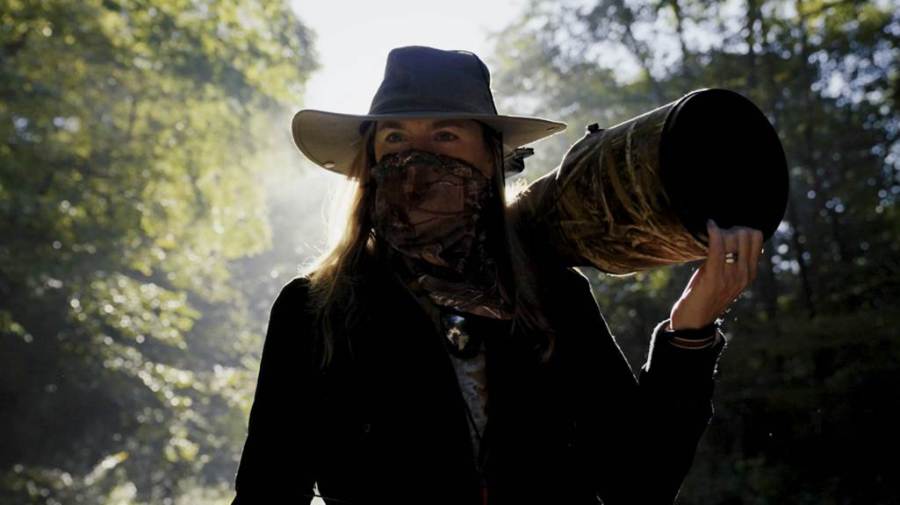
How do we know all this? Melissa Groo is a well-known wildlife photographer who spends hours, days, weeks waiting for just the right shot --- out in the wild. She had been very aware of these wildlife game farms and the damage they do to her profession --- and more importantly to the animals.
She was also aware of Heather Keepers, a trainer at Triple D for nine years. However, after witnessing too many horrors at Triple D --- such as indiscriminately killing adult animals to make room for babies because babies make more money --- Heather left Triple D and contacted Melissa to work together against Diest and his horror show.
Once rivals, Melissa and Heather work tirelessly to expose what really goes on at these wildlife game farms. They have filed numerous complaints to the USDA (United States Department of Agriculture) against Triple D. One such complaint detailed Triple D’s refusal to get veterinarian care for the animals in time, resulting in multiple, unnecessary deaths. Mold was found in the straw in the animals’ pens as a result of nothing being cleaned and animals virtually living amongst cardboard within the concrete walls --- beyond deplorable.
Despite all their documentation of animal cruelty, nothing is done. Heather continually gets the runaround from the USDA which only has 100 inspectors for 11,000 animal centers. They consistently fail to enforce laws, specifically the Endangered Species Act of 1973, which is supposed to protect these animals. Instead of seizing the wildlife which are being endangered, Triple D was fined $5000 --- THAT’S ALL! And they are still open for business today.
Diest even had the temerity to sue Melissa and Heather for wanting to intentionally hurt his business. The lawsuit was settled out of court, so no details revealed. But that has not deterred these two very brave, very dedicated women. When Triple D was trying to dump a bunch of older bobcats, Melissa and Heather found room for a couple of them in a wildlife sanctuary in Keenesburg, Co.
It is imperative that people are held accountable, and they must also be educated about this dangerous business. When looking at wildlife photography it is important to watch for three things:
- Is this wild behavior?
- Is this photo too perfect?
- Where is the photographer?
We are all guilty of consuming too-perfect images, but now that we know how and why, we must stop.
Schuler and Rogacki’s documentary is very well done and extremely informative. David and I were both sickened by the depravity exposed in CAPTURED. But, it’s a definite “See It Now!” for those of us who love all animals and wish for them to live in peace in their own natural habitats.
Not streaming yet
Opinion: See It Now!
David: CAPTURED is an extraordinary documentary which unveils the truth behind what is known as wildlife game farms. For photographers or any other entity seeking photos of wild animals for whatever purpose --- inclusion in a movie or TV show, for example, or even for pictures in a child’s magazine --- they consult a farm like the one portrayed in this film, Triple D Wildlife.
This game farm is located in Kalispell, Montana, and provides animals of all species to whomever is willing to pay for the opportunity. One huge problem is that this particular operation in Montana started in 1972, and although two women have been fighting its processes and procedures for years, Triple D is only now being exposed for the sham that it is in this shocking documentary.
There is much to unpack about this film. First off, we meet Heather Keepers when she is in the employ of the owner of Triple D, Jay Diest. Heather initially expounds on the wonderful animals available for photography and how well they are treated. She is shown hugging and holding some of the more adorable creatures on the farm. But we sense something is amiss, and that Heather is hiding something. She does not appear trustworthy in any sense.
However, a photographer, Melissa Groo, has been instrumental in investigating Triple D. She and Heather have been at odds with one another for a long time. But Heather ultimately finds her conscience and joins forces with Melissa to pore over records of Triple D seeking evidence of foul play, not to mention Heather’s own eyewitness testimony. In fact, Heather reveals she has documents dating back to 2016 of animal neglect at Triple D.
The pair ultimately reports Triple D and Diest to the United States Department of Agriculture (USDA) and files charges of animal abuse and fraudulent activity. Lawsuits are initiated and exchanged. The case with the USDA was settled after five years, but I will not reveal here what the outcome was, other than it was a total travesty!
The truth is that the several hundred animals on this game farm (one of three in the U.S.) live in 12X12 foot cages --- they are not really free and living off the land. But when photographers pay the price for capturing what is believed to be realistic animal behavior in their natural habitat --- they are being duped.
What actually happens is that the animals are transported from their “home” and allowed to roam in various settings until the picture shooting is accomplished. When the animals are let out of their concrete cages, the first thing they do is look for grass to feel under their feet --- heartbreaking!
What’s far more egregious is the fact that when an animal is injured or unable to “perform”, they are not treated by a vet. More often than not they are executed because they no longer have value for the proprietors. One woman interviewed for this film tearfully reveals she saw a Triple D male employee shoot a baby in the head to make room for another animal. And this act, we are told, occurred as many as 60 times for the same purpose.
CAPTURED is not an easy film to watch. In fact, after the first few minutes I pleaded with Jeanne not to watch this. She demanded that we continue viewing to give awareness to this horrific enterprise that Melissa and Heather are giving so much effort to expose.
CAPTURED is co-directed by Katie Schuler and Nick Rogacki, both experienced filmmakers. Ms. Schuler also doubled as director of photography and editing.
Opinion: See It Now!
 Print
Print